The Diagnostic Quest: How Lab Testing Maps Your Health
From blood draws to genetic blueprints, lab diagnostics are the unseen hero of modern medicine. Discover how testing services turn symptoms into answers.
The Silent Engine of Modern Healthcare
Every meaningful health journey begins with a question. Is my chest pain related to my heart? Why am I always tired? What does this odd lab result from last year really mean? The process of finding those answers—an often winding, confusing, and deeply personal path—can be summed up in a single word: the quest. And for millions of people, that quest leads straight to a laboratory.
Laboratory testing and medical diagnostic services are the quiet engine behind roughly 70% of clinical decisions, yet most patients only see a needle, a vial, and a waiting room. Understanding what happens behind the curtains of a modern diagnostic lab can change the way you approach your health. It can turn you from a passive patient into an active detective—someone equipped to ask better questions, interpret results with sharper eyes, and truly partner with your physicians.
The Rise of Direct-to-Consumer Lab Testing
Not long ago, the only way to get a blood test was through a doctor's order. You'd visit a clinic, get a slip of paper, and wander into a lab facility wondering which waiting room you were supposed to be in. Today, that model has been upended by direct-to-consumer (DTC) testing, giving you unprecedented control over your own diagnostic quest.
Company names like Quest Diagnostics have become household words by expanding self-orderable tests. You can now walk into a patient service center and request a lipid panel, a thyroid evaluation, or a vitamin D check without a physician's referral. The appeal is simple: convenience, privacy, and speed. You decide what you want to know, forking over a modest fee, and the lab does the rest.
Why Self-Ordered Tests Are on the Rise
Part of the boom is driven by wearable devices. Your smartwatch flags an irregular heartbeat; you want to check your troponin levels. Another driver is the preventative health movement. Instead of waiting for an annual check-up, people are monitoring biomarkers quarterly, catching trends before they become diseases. Self-ordered tests allow for that kind of proactive vigilance.
However, there is a catch. The data you receive is raw, and interpreting it requires nuance. For example, a borderline TSH result might mean nothing for one person, but warrant clinical action for another. The quest is not just to get a number; it's to find meaning in it. That's why even in a self-ordered model, involving a qualified professional to contextualize results is always a wise step.
Beyond the Needle: Inside a Modern Diagnostic Laboratory
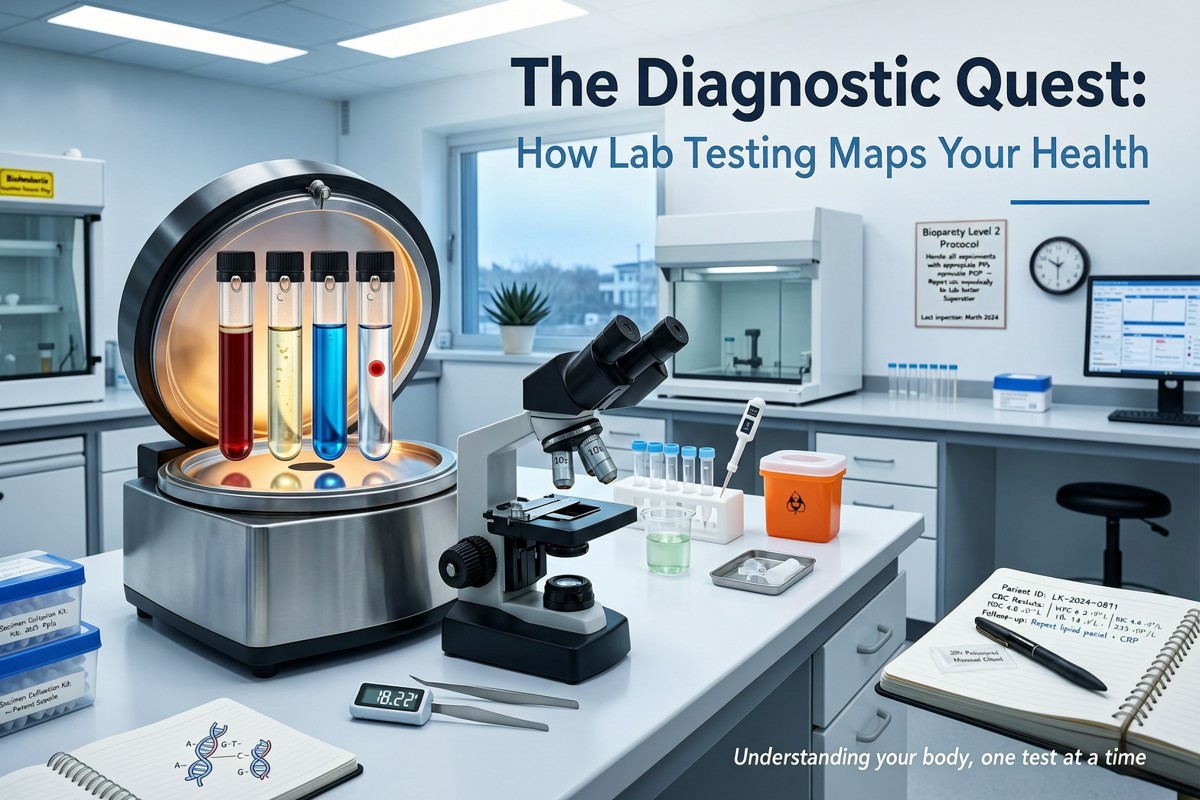
If you've ever wondered what happens after your blood sample leaves your arm, the answer is a marvel of automation and human expertise. The specimen goes into a uniquely labeled tube, often containing a gel separator that helps isolate serum or plasma. Then, it's transported to a central processing area where robotic arms spin, split, and send it to the right analyzer.
Modern high-throughput chemistry analyzers can run hundreds of tests per hour, using photometric or ion-selective electrode technology. They assess everything from glucose and cholesterol to liver enzymes and electrolytes. Meanwhile, immunochemistry analyzers handle hormones, tumor markers, and cardiac biomarkers like high-sensitivity troponin. If your sample is destined for a complete blood count, a hematology analyzer may simply count and classify hundreds of thousands of blood cells in under a minute.
Quality Control: The Unseen Watchdog
Accuracy doesn't happen by accident. Each day, lab technicians run quality control samples with known values. If those controls deviate beyond a narrow range, the entire analyzer is stopped until the issue is resolved. Moreover, proficiency panels are periodically sent to outside agencies to ensure a lab's results match expected national standards. This layer of vigilance is why a lab result is generally trustworthier than any at-home gadget.
How to Prepare: Practical Steps for a Successful Test
Many lab tests require fasting—usually 8 to 12 hours without food or beverages, except water. Others, like cortisol readings, must be drawn at specific times of day due to natural hormonal rhythms. Ignoring these instructions is a common cause of misleading results, forcing patients to redo the entire process.
- Hydrate: Drinking a glass of water before a blood draw makes veins easier to find and reduces discomfort.
- Mention your supplements: Biotin, sometimes called vitamin B7, can interfere with immunoassays and cause false results. Check with the lab if you take high-dose biotin.
- Move gently: Avoid heavy exercise before testing for muscle enzymes, as it can artificially elevate creatine kinase.
- Ask about caffeine: Coffee is not always forbidden, but it can affect glucose and adrenaline tests.
You can also ask the lab about their turnaround times. Most routine blood tests come back within 24 to 72 hours, while more specialized tests—like genetic sequencing—can take weeks. Knowing the expected schedule helps you avoid unnecessary anxiety while waiting.
Reading the Runes: Making Sense of Your Lab Report
The lab report lands in your patient portal, often without a single explanatory comment. You see rows of abbreviations, numbers, and so-called “reference ranges.” It's tempting to scan for anything flagged “hi” or “lo,” but the story is far more nuanced than a simple classification of normal or abnormal.
Reference ranges are typically derived from a healthy population—but “healthy” is situational. If you're on certain medications, your kidney function could be intentionally elevated. If you're a high-altitude resident, your hemoglobin is naturally higher. If you've had an organ transplant, you live in a world of immunosuppression that changes the meaning of every single white blood cell count.
That's why the interpretive layer matters. Modern diagnostic services often include downloadable guides and patient explanations for some tests. But the gold standard is a conversation. Your doctor looks at your results in the context of your medical history, your symptoms, and your previous baselines. A single out-of-range value rarely diagnoses anything; it's the pattern over time that reveals the truth.
The Genetic Frontier: Unlocking Your Biological Blueprint
Blood and urine tests are the workhorses of diagnostics, but the most ambitious quest is the one into your own DNA. Genetic testing offered by diagnostic services can reveal predispositions for hereditary cancers, explain rare diseases, and even predict how quickly you metabolize certain drugs—a branch known as pharmacogenomics.
Once reserved for the very ill or the very wealthy, genetic panels are becoming surprisingly affordable. Some services offer direct-to-consumer swabs that screen for the BRCA1 and BRCA2 mutations, though critics note that the absence of a mutation does not guarantee immunity. Yet even in that uncertainty lies the power of the quest. Knowing that you carry a genetic risk allows you to create a plan: earlier mammograms, more frequent colonoscopies, lifestyle modifications, or preventive surgery.
Navigating the Emotional Terrain
Genetic results are different from cholesterol numbers. They reveal family secrets, alter life insurance eligibility, and can trigger immense emotional responses. Before you embark on this branch of the diagnostic quest, lean on a genetic counselor. These professionals interpret the data and equip you to make decisions, not just medical ones, but psychological and familial ones as well.
The Future of the Diagnostic Quest
As we look ahead, lab testing is moving closer to the patient. Microfluidic chips, also known as labs-on-a-chip, can analyze a single drop of blood in your kitchen. Removable biosensors worn on the wrist promise continuous monitoring of cortisol and lactate. Artificial intelligence is starting to sift through millions of lab results to spot hard-to-detect patterns that human eyes miss.
But for all the technological wizardry, the fundamental principle remains unchanged. The quest for health is a search for knowledge, and knowledge comes from careful observation, rigorous science, and the courage to ask more questions. Whether you're awaiting a fasting lipid panel or a whole-genome sequence, you're not just a patient. You are an explorer, and the lab is your telescope.
Next time you receive a lab order, don't see it as a mindless chore. See it as the beginning of a quest—one that brings you closer to the truth of what is happening in your body. And in an age of misinformation, that truth is the most precious guide you have.