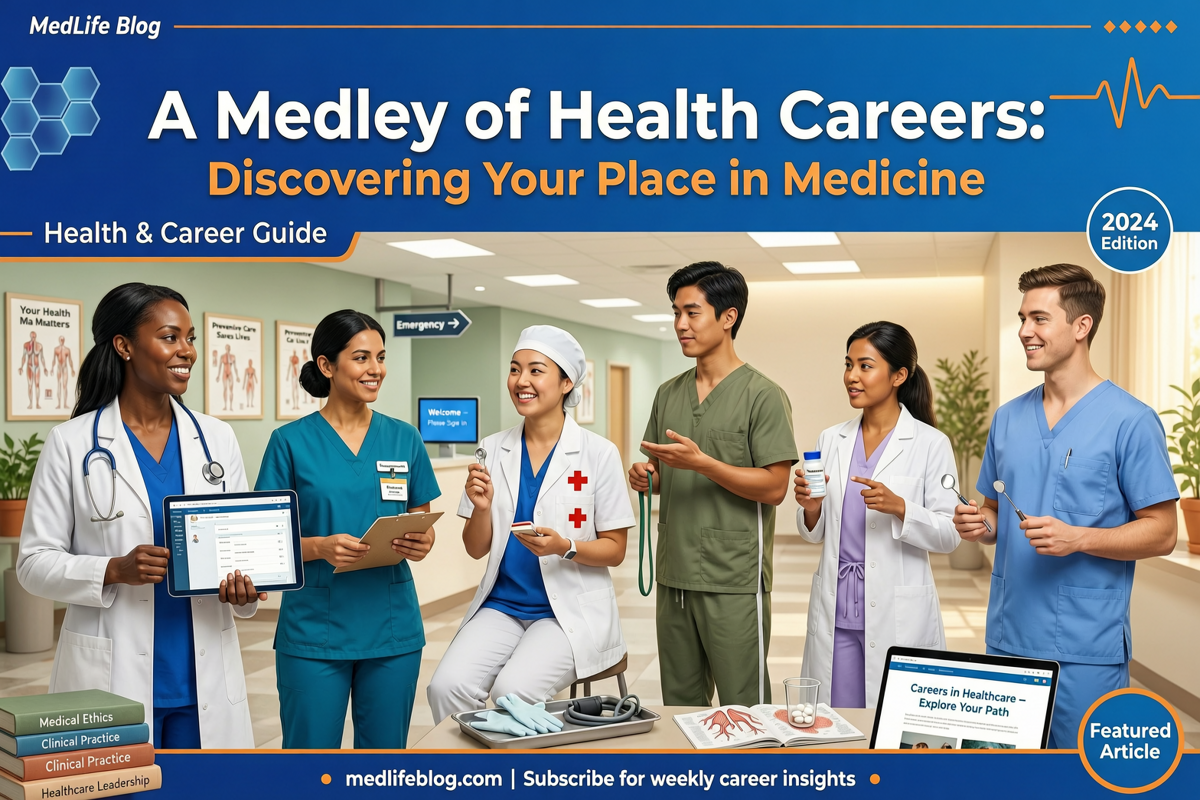
A Medley of Health Careers: Discovering Your Place in Medicine
From health informatics to physical therapy, the medical job medley offers diverse routes. Learn how to match your skills to a fulfilling healthcare career.
When you think of health and medical jobs, the classic images come to mind: physicians in white coats, nurses checking vital signs, surgeons under lights. Yet the modern healthcare ecosystem is a rich and varied medley of roles that extend far beyond the clinic floor. As technology evolves and patient needs grow, the industry is creating new positions that blend clinical expertise with data science, communication, advocacy, and innovation. If you are exploring a career in healthcare, you are not limited to one path. There is a symphony of possibilities waiting for you.
The Expanding Landscape of Health Careers
The global healthcare sector is undergoing a remarkable transformation. An aging population, the rise of chronic diseases, and the increasing prevalence of mental health challenges have pushed health systems to think differently. In parallel, digital tools like telehealth, electronic health records, and artificial intelligence are changing how care is delivered. This means more jobs are emerging at the intersection of health and other fields. The "job medley" is now a reality, offering a range of opportunities that cater to different backgrounds, interests, and skill levels.
No longer do you need a medical degree to have a meaningful career in health. Employers are actively seeking professionals from diverse fields—tech, design, customer service, finance, and education—to bring fresh perspectives. This inclusivity is what makes the medical job medley so attractive.
Clinical Roles Beyond the Physician
It is no surprise that clinical care remains the heart of healthcare. But the traditional hierarchy has flattened. Today, nurse practitioners (NPs) and physician assistants (PAs) often serve as primary care providers, leading patient visits and prescribing medication. Their roles are vital in rural areas and regions with physician shortages. Similarly, certified nurse midwives, nurse anesthetists, and clinical nurse specialists have carved out specialized niches.
Paramedics and emergency medical technicians (EMTs) are first responders who often make split-second decisions. They are the frontline heroes in emergencies, providing critical care before hospital admission. Beyond the ambulance, there are also surgical technologists, medical assistants, and phlebotomists who ensure smooth operations and diagnostics. These roles are accessible and offer clear progression paths.
Allied Health: The Backbone of Patient Care
Allied health professionals comprise one of the largest segments of the healthcare workforce. Physical therapists help patients recover mobility after injuries. Occupational therapists enable people to perform daily activities with independence. Speech-language pathologists assist those with communication and swallowing disorders. These professionals work closely with physicians but take on a hands-on, rehabilitative approach that patients often remember for a lifetime.
Radiologic technologists, cardiovascular technicians, and diagnostic medical sonographers operate imaging equipment to produce images for diagnosis. They must combine technical skills with patient comfort, often explaining procedures to anxious individuals. In many settings, these positions offer flexible schedules and require only an associate degree or certificate, making them some of the most practical entry points into the medley.
There are also respiratory therapists, dental hygienists, dietitians, and athletic trainers. Each role contributes to the overall well-being of individuals. The diversity of functions within allied health demonstrates that you can work with your hands, your mind, and your heart all at once.
The Rise of Health Tech and Data
One of the fastest-growing corners of the health and medical job medley is technology. Hospitals and clinics are now as reliant on data as they are on medications. Health informatics specialists analyze patient data to improve outcomes, reduce costs, and streamline workflows. They design electronic health record systems that are user-friendly for clinicians and administrators alike.
Health data analysts use tools like SQL and Python to extract insights from large datasets. They might identify patterns in disease outbreaks or track the effectiveness of treatments. Clinical informatics coordinators serve as a bridge between clinicians and software developers, translating medical needs into technical requirements. These roles require a blend of healthcare knowledge and technical proficiency, and many professionals transition into them after a few years of clinical or IT experience.
Telehealth coordinators have become essential in the post-pandemic era. They oversee virtual visits, manage patient portals, and ensure remote monitoring devices function properly. Meanwhile, artificial intelligence is creating a demand for AI product managers, machine learning engineers, and medical robotics specialists. If you have a passion for solving problems with code, you can absolutely contribute to healthcare without setting foot in an exam room.
Mental Health and Wellness Roles
The conversation around mental health has opened up dramatically, and with it, a host of careers. Licensed professional counselors and clinical social workers provide therapy for individuals, families, and groups. Psychologists diagnose and treat mental disorders, often focusing on assessment and research. Psychiatrists, of course, are medical doctors who can prescribe medication, but they represent only one slice of the mental health pie.
Peer support specialists are individuals with lived experience of mental illness or substance use disorders who help others navigate recovery. They are increasingly employed in hospitals, community health centers, and rehabilitation facilities. Their unique perspective is valued as part of the care team. Similarly, wellness coaches and health educators work on prevention, teaching communities about nutrition, stress management, and healthy lifestyles. These roles are ideal for people with strong interpersonal skills and a desire to make an impact on public health.
Administrative and Community-Facing Positions
Behind every successful healthcare system is a team of administrators and support staff. Healthcare administrators manage clinical facilities, budget operations, and coordinate services across departments. They ensure compliance with regulations and work to improve patient satisfaction. With the shift toward value-based care, administrators are key players in designing models that reward positive outcomes rather than volume of services.
Patient advocates help individuals understand their rights, navigate insurance, and communicate with doctors. They are the voices for patients in a complex system. Health navigators and community health workers go out into neighborhoods to connect people with care, especially in underserved populations. These roles require empathy, organization, and a deep knowledge of local resources.
Even roles like medical scribes, billing specialists, and transcriptionists are part of the medley. They keep systems running smoothly and provide excellent opportunities for those who are detail-oriented and prefer working behind the scenes.
How to Navigate the Medley
With so many options, how do you choose? Consider the following steps:
- Assess your strengths. Are you good with technology? Do you enjoy talking to people? Are you calm in high-pressure situations? Write down your answers.
- Explore through shadowing. Volunteer or spend a day with professionals in different settings to get a feel for the culture.
- Research educational paths. Determine whether you need a degree, certificate, or on-the-job training for the roles you find interesting.
- Check local demand. Look up job boards and salary information for the titles that appeal to you.
The educational path also varies. Some roles require a four-year degree, others an associate degree, certificate, or even just a high school diploma. There are accelerated programs, online degrees, and apprenticeship models. The key is to research the demand in your region and the salary outlook. Professional associations for each discipline often provide resources and job boards.
Your Place in the Medical Medley
The world of health and medical jobs is a medley of talent, and every role matters. Whether you are drawn to the science of diagnostics, the art of therapy, the logic of data, or the compassion of advocacy, there is a seat for you in this orchestra. The future of healthcare depends on a diverse and enthusiastic workforce. By exploring the spectrum of possibilities, you will not only build a meaningful career but also contribute to the well-being of communities everywhere. Take the leap, explore the options, and discover where your skills fit best in this ever-evolving field.