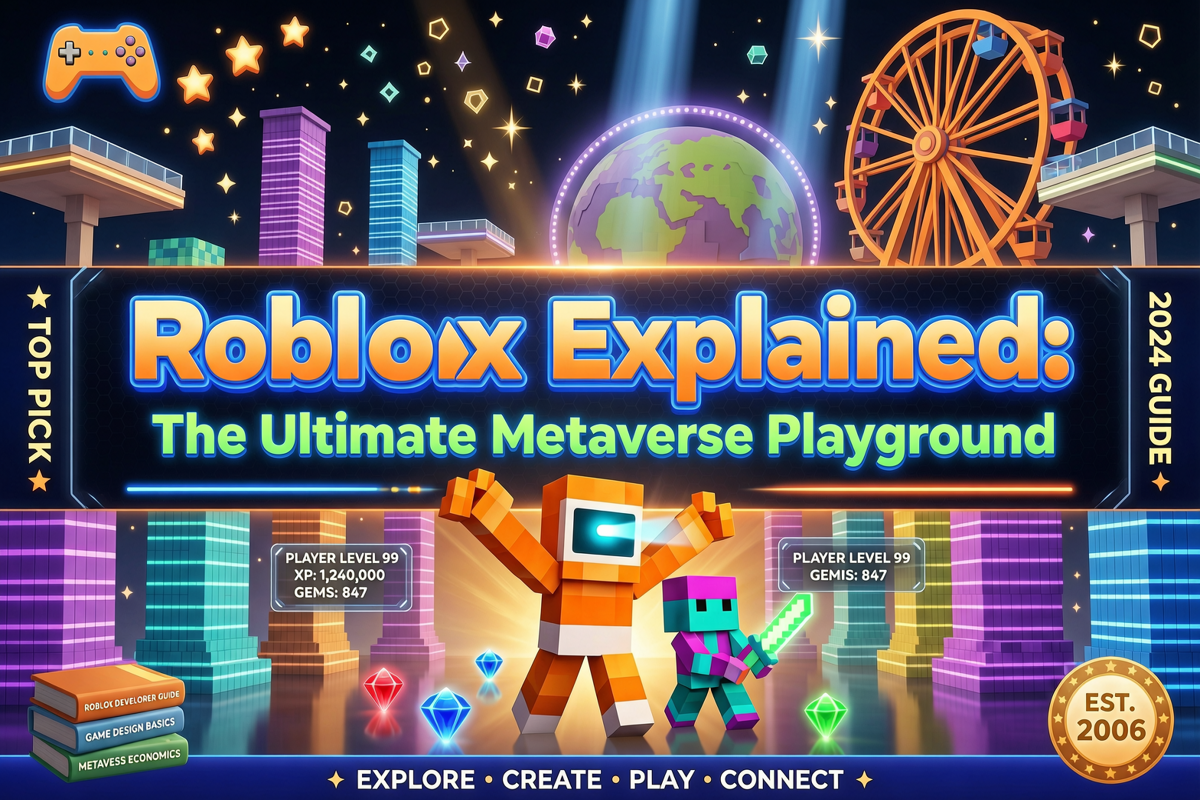
Roblox Explained: The Ultimate Metaverse Playground
Dive into Roblox's universe: a platform where over 200 million players code, create, and socialize. Discover how it's shaping the next digital generation.
When most people hear the word 'Roblox,' they picture a simple game for kids. But that image is long outdated. Roblox has evolved into a sprawling, interconnected platform that blends gaming, social media, education, and even commerce. With more than 200 million monthly active users, it’s no longer just a hobby—it’s a cultural phenomenon and a glimpse into what the metaverse might actually look like. Whether you're a parent, a curious gamer, or an aspiring developer, understanding Roblox is key to grasping the future of online interaction.
What Exactly Is Roblox?
At its core, Roblox is not a single game. It's a free-to-play platform that allows users to create, share, and play games made by other users. Think of it as a giant digital playground where the attractions are built by the visitors themselves. The platform offers tools like Roblox Studio, a beginner-friendly game development environment that uses Lua scripting. This means anyone, from a 10-year-old to a professional coder, can design their own worlds, game mechanics, and experiences.
The result is a staggering library of user-generated content. You can find obstacle courses (known as 'obby'), role-playing games, racing simulators, survival adventures, and even virtual concerts. The diversity is mind-boggling, and new games are added every minute. Unlike traditional games that ship once and remain static, Roblox is constantly refreshed by its community. That's why it never feels stale.
The Secret Sauce: User-Generated Content
What truly sets Roblox apart is its commitment to user-generated content (UGC). Unlike platforms like YouTube, where only a fraction of users create videos, Roblox actively empowers its entire community to build. Roblox Studio is free, and the company provides extensive tutorials, documentation, and even curriculum resources for educators. This low barrier to entry has spawned a generation of young creators who are learning valuable skills without realizing they're technically studying computer science.
For example, many successful developers started when they were just 11 or 12 years old, making simple games from templates. Over time, they honed their coding abilities, learned about game design, and even picked up basics of 3D modeling and monetization. In fact, Roblox has its own developer economy. Creators earn a virtual currency called Robux, which can be converted into real-world money through the Developer Exchange program. Some top creators earn six figures or more each year, turning a childhood hobby into a career.
This creative loop creates a powerful incentive. The more you play, the more ideas you get. The more ideas you get, the more you want to build. And the more you build, the more you earn recognition and, potentially, money. It's a virtuous cycle that keeps the platform fresh and engaging.
More Than Fun: Social Interaction and Communities
Roblox isn't just about the games themselves; it's about who you share them with. Each user has a customizable avatar, and players can join friends in private servers or hop into public lobbies. The chat system—though heavily filtered for safety—allows for real-time communication, strategy discussions, and simple banter. Many players spend hours just hanging out in a game's lobby, making friends from around the world.
Beyond individual games, Roblox has a robust group system. Players can join 'groups' based on shared interests, gaming clans, or fan communities. These groups often host their own events, from virtual fashion shows to charity fundraisers. This social scaffolding mimics real-world clubs and teams, giving kids a safe space to develop social skills, teamwork, and leadership. For many, Roblox is their first taste of online social networking, and it's designed to be more playful and less pressurized than platforms like Instagram or Twitter.
The Robux Economy: Turning Play into Profit
Robux is the central currency of Roblox. Players can earn it by creating and selling items, developing games, or simply by purchasing it with real money. The in-game store is a bustling marketplace where creators sell avatar accessories, game passes, and premium experiences. Every purchase takes a cut for Roblox, but the lion's share goes to the creator. This has caused a gold rush, with developers competing to build the most engaging and monetized experiences.
But Robux also fuels player status. Buying a flashy hat or an exclusive animation can set you apart in a server. Like currency in any game, it adds a layer of progression and personalization. However, it's also a point of scrutiny. Spending real money on cosmetic items can be a concern for parents, which is why Roblox has implemented parental controls and spending limits. Still, the economy is a powerful draw—it teaches basic economic principles, supply and demand, and even pricing strategies to budding entrepreneurs.
Educational Value and Career Potential
Parents and educators have begun to see Roblox not just as a toy, but as an educational tool. Many schools use Roblox Studio to teach coding, digital design, and collaboration. The platform's accessibility makes it perfect for introducing students to logic and problem-solving. Rather than abstract theory, kids see immediate results: they write a line of code and their character jumps higher or a door opens. That instant feedback loop is incredibly motivating.
Beyond coding, Roblox offers lessons in entrepreneurship. Creating a successful game requires planning, marketing, and user feedback. Young developers learn to iterate on their designs, listen to their communities, and manage a budget. These are skills that translate directly to future careers in tech, marketing, and design. Even for non-creators, being a savvy player involves critical thinking, spatial reasoning, and strategic planning.
Safety and Age Considerations: What Parents Should Know
With so much user-generated content, no platform is entirely risk-free, and Roblox is no exception. The company has made significant investments in safety, including AI moderation, human moderators, and chat filters designed to block personal information. There are also parental controls that allow you to restrict who your child talks to, limit the games they can access (based on age rating), and set spending caps.
Yet, the system isn't perfect. Some malicious users attempt to circumvent filters, and certain games can feature mature themes if not properly moderated. The best approach is to stay engaged. Play with your child, ask to see their creations, and talk to them about staying safe online—just as you would about any internet activity. By setting a few ground rules and enabling the built-in privacy settings, Roblox can be a genuinely positive experience for kids as young as seven or eight.
The Road to the Metaverse
Roblox's ultimate ambition is to become the metaverse—a persistent, shared virtual space where people work, play, and socialize. The company regularly hosts virtual events with major brands, such as Gucci's virtual fashion shows and concerts by top pop stars. These aren't just advertising stunts; they're experiments in digital commerce and identity. Players buy exclusive virtual merchandise and attend live performances from the comfort of their bedrooms. The line between physical and virtual experiences continues to blur.
In many ways, Roblox is already the closest thing to a functioning metaverse. It has a fully integrated economy, a social ecosystem, and unlimited creative freedom. As technology improves and virtual reality headsets become more common, Roblox is positioned to expand beyond the screen into immersive 3D worlds. The company's investment in real-time 3D rendering and its massive user base give it a massive head start in this race.
In conclusion, Roblox is far more than a children's game. It's a creative engine, a social network, an economic powerhouse, and a precursor to the digital future. Whether you're building your first obstacle course or just curious about where online interactions are headed, Roblox offers a fascinating window into the possibilities of connected play. The metaverse may still be in its infancy, but its playground is already here—and it's packed.