XRP 2025: Cross-Border Payments and Regulatory Clarity
Explore XRP's evolving role in global payments, its legal battles, and what 2025 holds for this digital asset in the currency exchange landscape.
Introduction
XRP, the native digital asset of the XRP Ledger, has long been at the center of discussions about the future of cross-border payments. As 2025 unfolds, the cryptocurrency continues to navigate a complex landscape of regulatory developments, technological advancements, and market dynamics. This article explores XRP's journey as a bridge currency for international transfers, its legal standing after the SEC lawsuit, and its potential trajectory in the coming year.
XRP's Role in Cross-Border Payments
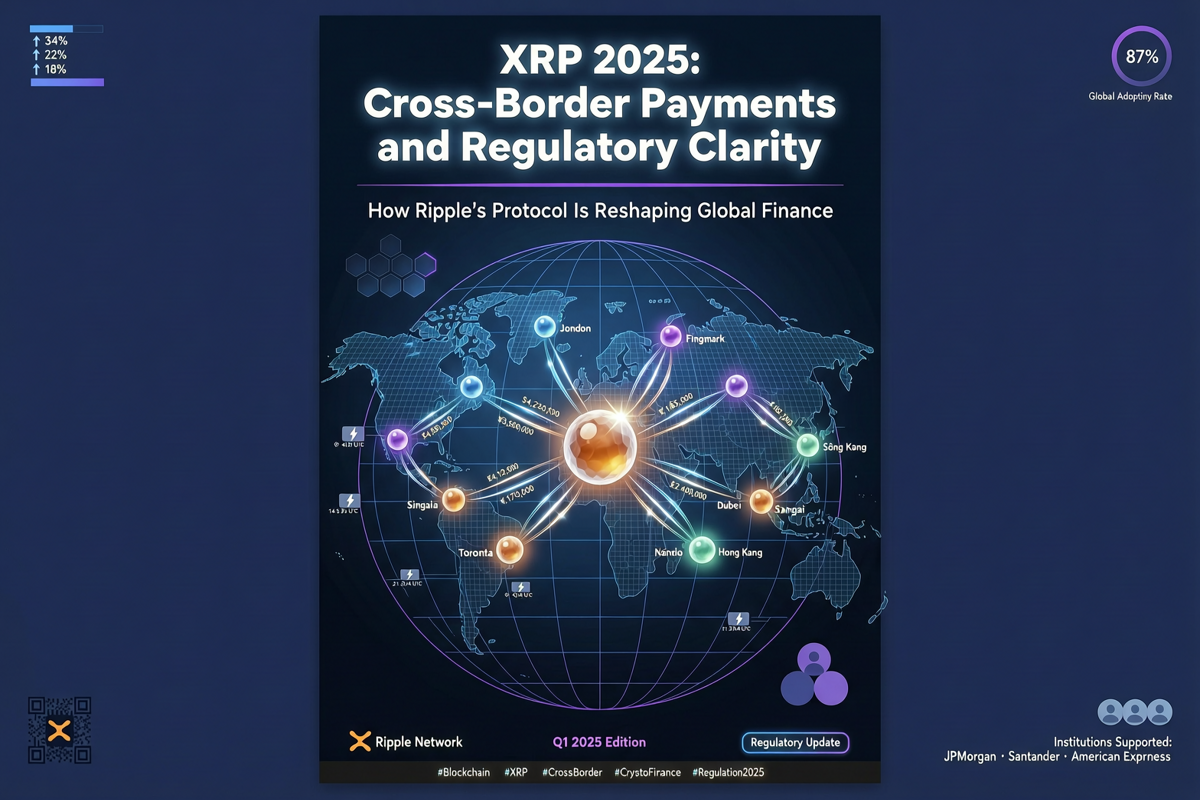
XRP was designed as a fast, low-cost settlement layer for financial institutions. Unlike traditional correspondent banking, which can take days and incur high fees, XRP transactions settle in seconds for a fraction of a cent. The technology leverages a consensus protocol rather than proof-of-work, making it energy-efficient and scalable. Ripple, the company behind XRP, has built a suite of payment solutions, including RippleNet and On-Demand Liquidity (ODL), which use XRP as a bridge between fiat currencies. In 2024, Ripple expanded its ODL network to include new corridors in Asia and Africa, signaling growing adoption for real-time remittances and business payments.
Regulatory Clarity: The SEC Lawsuit and Its Aftermath
One of the most significant events for XRP was the 2020 lawsuit by the U.S. Securities and Exchange Commission (SEC), alleging that XRP was an unregistered security. In July 2023, a federal judge ruled that XRP was not a security when sold on public exchanges, though institutional sales were deemed securities transactions. This partial victory provided some regulatory clarity, but uncertainty remained. By 2025, the case has reached a settlement phase, with Ripple agreeing to pay a reduced penalty and implement stricter compliance measures. This outcome has been broadly positive for the market, as it removes the existential threat of delisting and establishes a precedent for other digital assets.
Impact on Global Adoption
With greater legal certainty, banks and financial institutions have become more willing to integrate XRP solutions. In 2024, several major banks in Europe and the Middle East announced pilot programs using Ripple's technology for cross-border settlements. The clarity also encouraged crypto exchanges to relist XRP in jurisdictions where it had been removed. As of early 2025, XRP is trading on over 150 exchanges globally, with healthy liquidity pairs against USD, EUR, and Asian currencies.
Technological Upgrades: The XRP Ledger (XRPL) in 2025
The XRP Ledger has seen continuous development. Recent upgrades include the implementation of the XLS-20 standard for non-fungible tokens (NFTs), which has spurred a vibrant ecosystem of digital art and tokenized assets on the network. Additionally, the introduction of automated market maker (AMM) functionality has boosted decentralized finance (DeFi) activity on XRPL. While XRP itself remains focused on payments, these features enhance the network's utility and attract developers. The proof-of-association consensus used by XRPL remains unique, offering final settlement without forking risks.
Market Outlook for XRP in 2025
Price predictions for XRP vary widely, but analysts point to several catalysts. The growing use of ODL for cross-border payments adds real demand for XRP as a bridge asset. Additionally, the potential for a spot XRP ETF in the U.S., following the SEC's approval of Bitcoin and Ethereum ETFs, could draw institutional capital. However, competition from other payment-focused blockchains (e.g., Stellar) and the volatile nature of crypto markets remain risks. On the macroeconomic side, interest rate decisions and global trade volumes will influence remittance and payment flows.
Key Drivers to Watch
- Adoption by Financial Institutions: More banks using ODL directly correlates with XRP transaction volume and price stability.
- Regulatory Sandboxes: Central banks exploring digital currencies (CBDCs) could use XRPL as a testbed, given its speed and low cost.
- Legal Finality: Full dismissal of remaining SEC claims would remove overhang and boost investor confidence.
- Technological Partnerships: Integration with major payment processors like Visa or PayPal could expand XRP's reach.
Challenges and Risks
Despite the progress, XRP faces hurdles. Central bank digital currencies (CBDCs) could reduce the need for a bridge asset like XRP if countries prefer direct bilateral settlement. Additionally, blockchain interoperability solutions may enable the same functionality without a native token. The regulatory landscape remains fragmented: while the U.S. case is settling, European MiCA regulations impose strict requirements on issuers of asset-referenced tokens, which could apply to XRP if classified as such. Moreover, market volatility and speculative trading often disconnect XRP's price from its underlying utility.
Conclusion: The Verdict for 2025
XRP has emerged from its legal battles with a clearer identity as a payment-focused digital asset. In 2025, its success will hinge on sustained adoption by financial institutions and the broader regulatory acceptance of blockchain-based settlement systems. While challenges remain, XRP's unique value proposition—fast, cheap, and scalable cross-border transactions—positions it as a key player in the evolution of global currency exchange. For investors and businesses alike, staying informed about regulatory changes and network developments will be essential.