Dow Futures Decoded: The Pre-Market Pulse of Wall Street
Discover how Dow futures work, why they signal the stock market's next move, and how you can use them to stay ahead of the opening bell. Learn the essentials.
What Exactly Are Dow Futures?
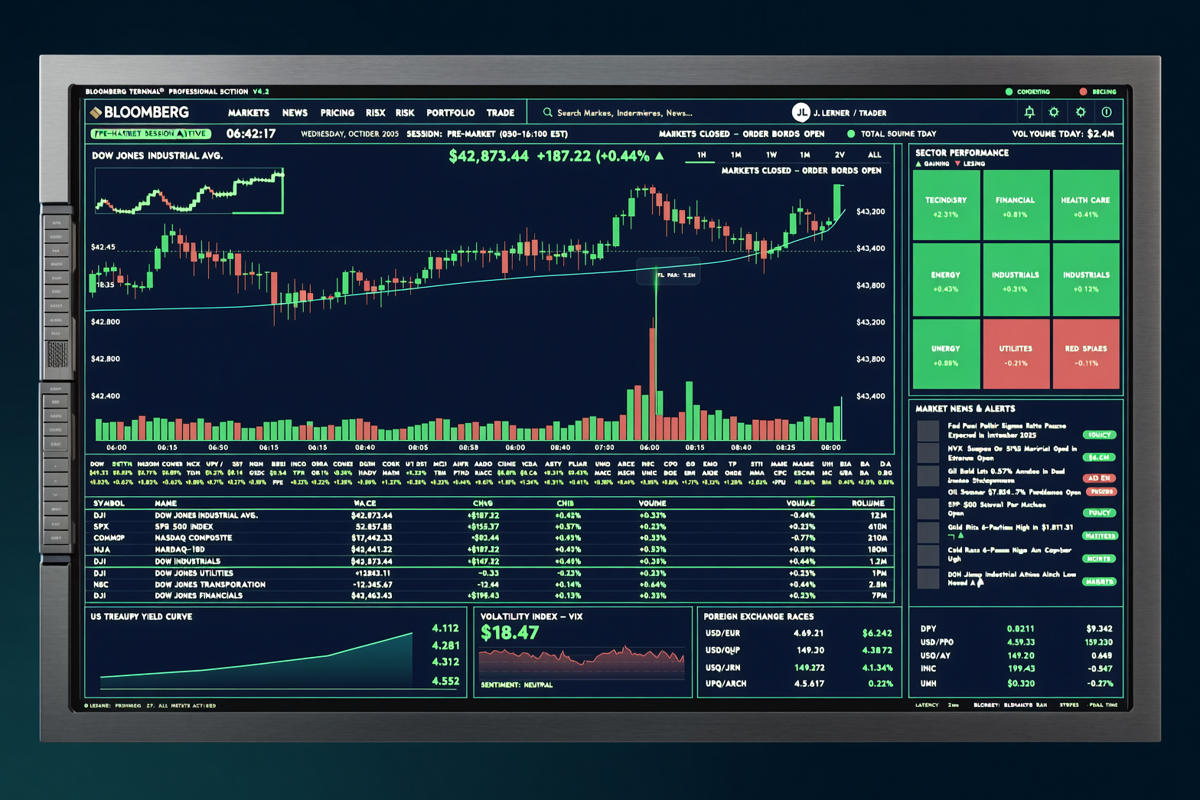
When the closing bell rings on Wall Street, the trading day is far from over. Around the clock, investors and institutions are buying and selling contracts that track the Dow Jones Industrial Average (DJIA) — these are known as Dow futures. They are derivative instruments that allow traders to bet on the future value of the Dow, the iconic index of 30 large U.S. companies. While the underlying index is a snapshot of stock prices during regular market hours, Dow futures trade nearly 24 hours a day, offering a continuous read on investor sentiment.
Many people first encounter Dow futures through news headlines like “Dow futures point to a higher open” or “Dow futures slide on inflation fears.” These reports reflect how futures contracts are moving before the New York Stock Exchange opens at 9:30 a.m. Eastern Time. But futures are more than just a pre-market crystal ball; they are a vital tool for hedging, speculation, and global portfolio management.
The Mechanics: How Dow Futures Work
Dow futures are standardized contracts traded on the Chicago Mercantile Exchange (CME) under the symbol “YM.” Each contract represents a specific dollar amount times the Dow Jones Industrial Average. For example, if the Dow is at 35,000, the notional value of one contract might be 35,000 × $5 = $175,000. That multiplier can vary; the E-mini and Micro E-mini Dow futures offer smaller sizes for individual traders.
Futures contracts have expiration dates, typically falling on the third Friday of the contract month. Traders can hold positions to that date or roll them over to a later month. Crucially, these contracts are settled in cash, meaning no physical stocks change hands. You are simply settling the difference between the agreed-upon price and the final index value.
One of the most appealing aspects of futures is margin efficiency. Rather than putting up the full notional value, traders only need to post a margin deposit — often around 5-10% of the contract's worth. That allows for significant leverage, amplifying both gains and losses. This is why risk management is paramount when trading Dow futures.
Why Dow Futures Matter to Every Investor
Even if you never place a futures trade, Dow futures should be on your radar. They serve as a continuous feedback loop for global markets. When economic data releases or geopolitical events occur overnight, futures prices adjust instantly, offering a preview of how stock markets will react.
The “fair value” principle is key. Fair value is the theoretical price of the index futures contract based on interest rates and dividends. When futures trade above fair value, it suggests that buyers are willing to pay a premium to own the exposure, often translating into strength at the open. Conversely, a discount signals bearish sentiment. Many day-trading strategies use this gap as a directional whisper.
Dow futures also enable institutions to hedge their equity portfolios. A pension fund might sell futures to offset potential losses in its stock holdings during turbulent times. This activity adds liquidity and depth to the market, benefiting everyone by narrowing bid-ask spreads and stabilizing prices.
What Moves Dow Futures?
A host of forces influences Dow futures, starting with macroeconomic indicators. Reports on employment, consumer price inflation, gross domestic product, and Federal Reserve policy decisions can cause contracts to swing violently. For instance, a hotter-than-expected CPI print often sparks a futures selloff as traders anticipate aggressive interest rate hikes. On the other hand, declining jobless claims might boost futures by signaling corporate profitability.
Corporate earnings are another major driver. Since the Dow is composed of 30 blue-chip companies, a blowout earnings report from a heavyweight like Apple or JPMorgan can lift the entire index — and its futures — even during non-trading hours. This is especially true for guidance about future quarters, as investors reassess valuations immediately.
Global events matter just as much. Tensions in the Middle East, trade negotiations between the U.S. and China, or a sudden spike in oil prices can all ignite risk-on or risk-off sentiment. Geopolitical shocks often cause futures to gap, leading to abrupt market openings that can create opportunities for nimble traders.
How to Interpret Dow Futures Quotes
Reading futures quotes is straightforward once you understand a few terms. The “bid” and “ask” show the current buy and sell prices, while “last” is the most recent trade. More importantly, watch the percentage change and the distance from fair value. A futures gain of +1.5% suggests a bullish open, but that doesn't guarantee the cash index will open at that level. The gap between futures and fair value can narrow or widen based on pre-market activity.
Pay attention to volume as well. Low-volume moves can be misleading, driven by a handful of large trades. During off-hours, a modest price change might be more noise than signal. As the open approaches, volume thickens, making the futures quote a more reliable indicator.
Institutional traders often execute “program trades” within the first few minutes of the open, exploiting any discrepancy between futures and the underlying stocks. This convergence mechanism explains why the index and futures usually align closely after the bell. For a casual observer, watching the futures trend over the last hour before the open is more informative than any single quote.
Using Dow Futures in Your Own Strategy
Should you trade Dow futures yourself? The answer depends on your experience, risk tolerance, and capital. Micro E-mini Dow futures offer a smaller contract size, making them accessible for retail investors. Yet the leverage can wipe out a small account if you are not disciplined.
If you prefer a simpler approach, you can use futures signals to time your buying and selling of index ETFs or individual stocks. For example, if futures are deeply negative on a day when you planned to add to a long-term position, you might wait for a better entry point. Long-term investors should resist the urge to overtrade based on futures moves — a 1% drop pre-market is often just noise in a broader uptrend.
For those who do wish to trade, start with a paper account to practice. Learn the contract specifications, set stop-loss orders, and never risk more than a small portion of your capital on a single trade. The futures market is relentless, open from Sunday evening to Friday afternoon, which can be mentally taxing. It rewards patience, not impulse.
The Bottom Line
Dow futures are the pre-market pulse of Wall Street, a real-time gauge of investor confidence that bridges the gap between trading sessions. They are indispensable for institutions and increasingly popular among active retail traders. By understanding how they work and what drives them, you can make more informed decisions about your portfolio — whether you're an active trader or a long-term investor.
The next time you see a headline about Dow futures, remember that you are watching the world's financial markets adjusting to new information in real time. That signal, if read correctly, can help you navigate the opening bell with confidence. But always stay aware of the risks, manage your exposure, and let your strategy — not emotion — guide your trades.