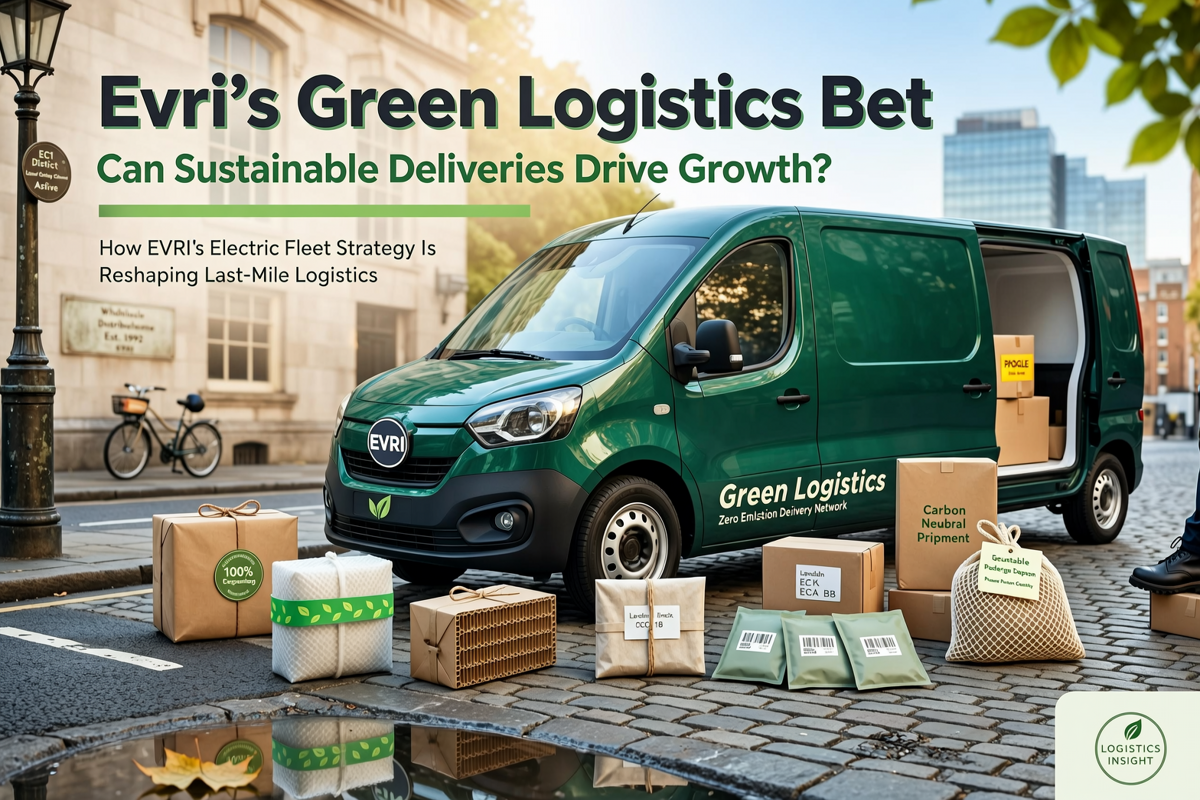
Evri's Green Logistics Bet: Can Sustainable Deliveries Drive Growth?
Evri pivots to sustainability and tech to stay competitive in the crowded UK parcel market. Can its green logistics strategy deliver growth?
Introduction
Evri, formerly known as Hermes, has undergone a significant transformation over the past few years. Once a brand synonymous with mixed reviews, the company has rebranded and refocused its efforts on technology and sustainability. As the UK parcel market becomes increasingly saturated with players like Royal Mail, DPD, and Amazon Logistics, Evri is betting big on green logistics as a differentiator. But can this strategy not only improve its environmental footprint but also drive profitable growth?
The State of UK Parcel Delivery
The UK e-commerce market continues to expand, with parcel volumes projected to reach 4.5 billion by 2025. This growth brings immense opportunities but also fierce competition and increased scrutiny on environmental impact. Last-mile delivery accounts for a significant portion of carbon emissions in the supply chain. Consumers are more conscious than ever about the carbon footprint of their deliveries, with studies showing that over 60% of UK shoppers prefer carriers that offer sustainable delivery options.
Evri already handles more than 700 million parcels annually, making it one of the largest courier companies in the UK. However, its reputation has historically been marred by customer service issues and inconsistent delivery experiences. The company's rebrand to Evri in 2022 was a clear attempt to shed that legacy and start fresh.
Evri's Sustainability Pledge
Evri has set ambitious sustainability targets. The company aims to achieve net-zero carbon emissions by 2035, a goal that aligns with the UK's broader climate commitments. To get there, Evri is investing heavily in electric vehicles (EVs), alternative fuel sources, and optimized routing technology.
One of the flagship initiatives is the deployment of over 1,000 electric vans across its UK fleet by the end of 2025. The company is also testing e-cargo bikes for urban deliveries in cities like London and Manchester. These zero-emission vehicles tackle the twin challenges of air pollution and traffic congestion.
Furthermore, Evri has introduced a 'Green Delivery' option for customers, allowing them to choose a slower, consolidated delivery slot that reduces the number of trips. Early data suggests that this option has been adopted by roughly 15% of customers, a number Evri hopes to increase through better communication and incentives.
Technology as an Enabler
Beyond greening its fleet, Evri is leveraging technology to reduce inefficiencies. The company uses artificial intelligence to optimize delivery routes, reducing mileage and fuel consumption. Its network of lockers and 'Parcelshop' drop-off points (over 7,000 across the UK) also helps by consolidating deliveries and reducing failed first-time deliveries, which are a major source of wasted carbon.
Evri's app now provides real-time tracking and carbon footprint data for each parcel, allowing consumers to see the environmental impact of their delivery choices. This transparency is building trust and encouraging more sustainable behavior.
Challenges on the Road
Despite these efforts, Evri faces significant hurdles. The transition to EVs requires massive capital investment—each electric van costs nearly double its diesel counterpart. Charging infrastructure remains patchy, especially for depot-based operations. And while the company has signed up to the UK government's Road to Zero strategy, the reality of scaling a green fleet across a vast and diverse geography is daunting.
Additionally, Evri's workforce model—heavily reliant on self-employed couriers—presents sustainability challenges. These couriers often use their own vehicles, and incentivizing them to switch to EVs is difficult. Evri has started offering leasing options for electric vans to its couriers, but uptake has been slow due to upfront costs.
Customer perception is another hurdle. The 'Hermes' brand stigma still lingers, and Evri must work hard to prove that its service improvements are real. Negative reviews on sites like Trustpilot can undermine even the best sustainability messaging.
Competitive Landscape
Evri is not alone in going green. Royal Mail has pledged to achieve net-zero by 2040 and is trialing electric trucks. DPD claims to have the largest electric fleet in Europe. Amazon, with its massive scale and resources, has ordered 100,000 electric delivery vans globally. Evri must not only match these commitments but also differentiate itself through service reliability and pricing.
The company's network of Parcelshops and lockers gives it an advantage in the 'click-and-collect' market, which is growing as consumers seek flexibility. By making these access points fully integrated with its sustainability dashboard, Evri can offer a unique proposition: a convenient, low-carbon delivery option that doesn't sacrifice speed.
Conclusion
Evri's green logistics bet is bold, but it is not without risk. The company is investing millions into a strategy that may take years to pay off—both in terms of environmental impact and financial returns. However, with increasing regulatory pressure and consumer demand for sustainable options, it's a bet that Evri cannot afford to lose. If successful, Evri could redefine itself as a leader in sustainable parcel delivery, turning its legacy challenges into a competitive advantage. For now, the industry will be watching closely to see if Evri can deliver on its promises—both green and commercial.