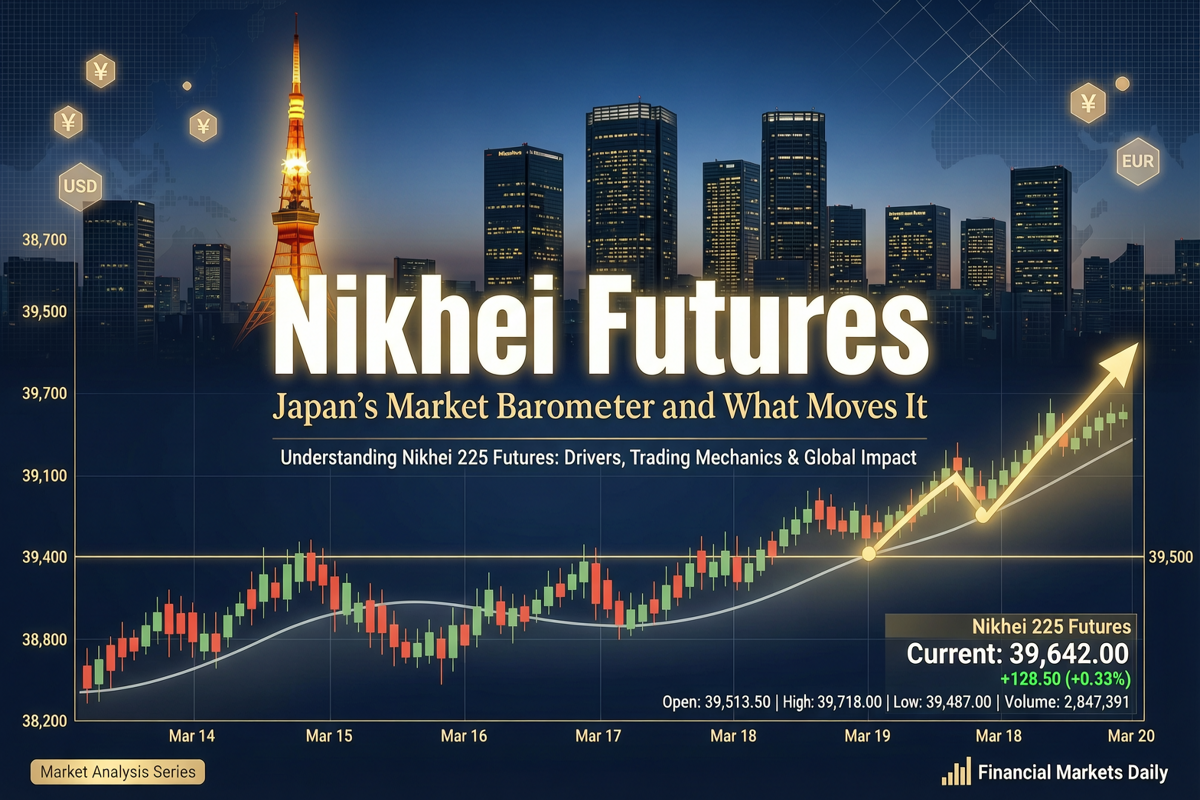
Nikkei Futures: Japan's Market Barometer and What Moves It
Explore how Nikkei futures shape investor sentiment and what key factors—from BOJ policy to global cues—drive these essential derivatives in 2025.
Introduction to Nikkei Futures
Nikkei futures are among the most actively traded equity index derivatives in Asia, serving as a barometer for Japan's stock market and broader investor sentiment. Traded primarily on the Osaka Exchange and Singapore Exchange, these contracts allow investors to speculate on or hedge against the future direction of the Nikkei 225 Stock Average. Understanding the dynamics behind Nikkei futures is crucial for anyone involved in Japanese equities, global portfolio diversification, or Asia-focused trading strategies.
What Are Nikkei Futures?
Nikkei futures are standardized financial contracts that derive their value from the Nikkei 225—a price-weighted index of 225 top Japanese companies listed on the Tokyo Stock Exchange. Each futures contract represents an agreement to buy or sell the index at a predetermined price on a specified future date. Unlike trading individual stocks, futures offer leveraged exposure, meaning traders can control a large notional value with a relatively small margin deposit. This leverage amplifies both gains and losses, making risk management paramount.
These futures are cash-settled, so no physical delivery of stocks occurs. Instead, the difference between the contract price and the index level at expiration is settled in cash. Major contracts include the Osaka Exchange Nikkei 225 futures (ticker: JPN) and the SGX Nikkei 225 futures (ticker: SSI), offering round-the-clock trading nearly 24 hours a day.
Key Drivers of Nikkei Futures
Several factors influence the price movements of Nikkei futures. Understanding these drivers helps investors anticipate market shifts.
Bank of Japan Monetary Policy
BOJ decisions on interest rates, yield curve control, and quantitative easing have an outsized impact. In 2024-2025, the BOJ's gradual normalization from ultra-loose policy is a dominant theme. Any hint of rate hikes strengthens the yen, which can weigh on export-heavy Nikkei components. Conversely, dovish stances often boost futures.
Currency Fluctuations (USD/JPY)
The yen-dollar exchange rate directly affects Japanese corporate earnings. A weaker yen inflates export revenues when converted back to yen, lifting Nikkei 225 components like Toyota, Sony, and Nintendo. Therefore, Nikkei futures tend to rise when the yen weakens and fall when it strengthens.
Global Economic and Geopolitical Events
Japan's export-driven economy makes it sensitive to global demand, especially from the U.S. and China. Trade tensions, geopolitical risks (e.g., North Korea), or recessions abroad can trigger sharp moves in Nikkei futures. Additionally, U.S. equity futures, particularly on the S&P 500, often lead Asian trading sessions.
Corporate Earnings and Index Rebalancing
Quarterly earnings reports from heavyweight stocks like Fast Retailing, Tokyo Electron, and SoftBank cause index-level volatility. Moreover, the annual rebalancing of the Nikkei 225 in October can lead to significant futures positioning as funds adjust their portfolios.
Technical Factors and Market Sentiment
Futures markets are sensitive to technical levels (support/resistance), trading volumes, and open interest. High-frequency trading and algorithmic strategies amplify short-term moves. Sentiment gauges like the Nikkei 225 futures premium/discount to the spot index provide clues about market expectations.
Recent Trends and Outlook for 2025
Heading into 2025, Nikkei futures have experienced heightened volatility. The Nikkei 225 hit 33-year highs in 2024, driven by corporate governance reforms, record tourism, and foreign inflows. However, concerns about a global slowdown and BOJ tightening have introduced uncertainty. Key themes for 2025 include:
- BOJ Exit Strategy: The central bank's pace of rate hikes and reduction of bond purchases will be critical. A dovish surprise could ignite a rally, while aggressive tightening might weigh on futures.
- Yen Carry Trade Unwind: With higher Japanese yields, the popular yen carry trade (borrowing cheap yen to buy higher-yielding assets) may unwind, causing cross-market dislocations.
- Structural Reforms: Tokyo Stock Exchange's push for improved corporate governance (e.g., higher dividends, share buybacks) continues to attract foreign investors, supporting futures.
- China Slowdown: As Japan's largest trading partner, any weakness in China's economy poses downside risks for Nikkei futures.
Strategies for Trading Nikkei Futures
Given the leverage and volatility, traders should employ disciplined strategies.
Hedging
Portfolio managers holding Japanese equities can use Nikkei futures to hedge against broad market declines. Selling futures short reduces exposure without liquidating holdings.
Speculation
Directional traders analyze macroeconomic data, BOJ speeches, and technical patterns. Intraday volatility is often highest during the London and New York overlaps with Asian hours.
Spread Trading
Calendar spreads (buying one month and selling another) allow traders to profit from contango or backwardation without taking outright directional risk.
Risk management is essential: stop-loss orders, controlled position sizing, and monitoring margin requirements prevent catastrophic losses. Beginners should start with simulated trading platforms.
Conclusion
Nikkei futures offer a window into Japan's economic health and global investor sentiment. Their drivers are multifaceted, spanning central bank policy, currency moves, and international events. As 2025 unfolds, staying attuned to BOJ communication, yen dynamics, and global risk appetite will be key for navigating this exciting but volatile market. Whether for hedging or speculation, understanding these futures is a valuable tool for any serious investor in Asian markets.