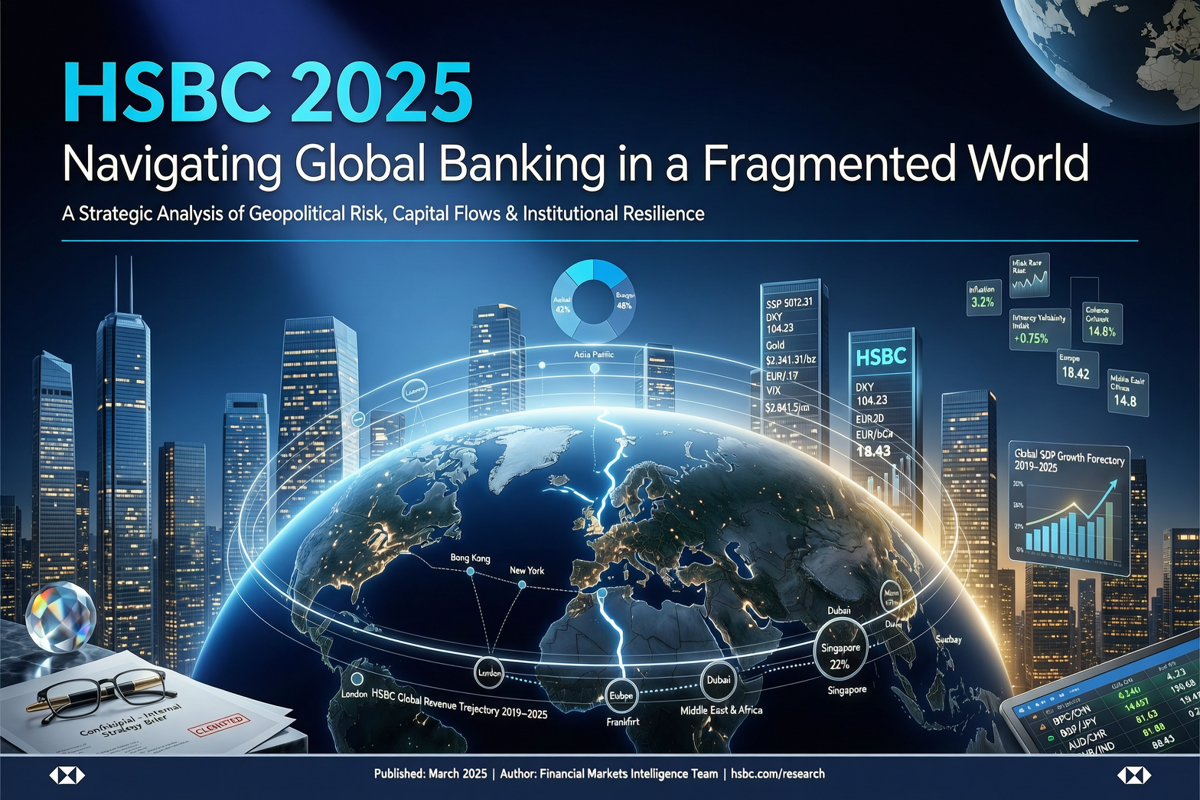
HSBC 2025: Navigating Global Banking in a Fragmented World
HSBC is reinventing itself for 2025: digital transformation, pivot to Asia, and sustainability goals. Here's what customers and investors need to know.
HSBC at a Crossroads
HSBC Holdings, one of the world’s largest banking and financial services organizations, is navigating a complex landscape in 2025. With a history stretching back to 1865, the London-headquartered bank has weathered wars, financial crises, and technological revolutions. Today, it faces a new set of challenges: geopolitical fragmentation, rising competition from digital-first banks, and the urgent need to decarbonize its lending portfolio. This article explores HSBC’s strategic priorities for 2025, including its pivot to Asia, digital transformation, and sustainability commitments.
The Asia Pivot: Doubling Down on Growth Markets
HSBC generates the majority of its profits in Asia, particularly in Hong Kong and mainland China. In 2025, the bank is deepening its focus on the region, aiming to capture wealth management and trade finance opportunities as China reopens and Southeast Asian economies expand.
Wealth Management Expansion
HSBC is investing heavily in its wealth and personal banking division, targeting affluent clients in Asia. The bank plans to hire hundreds of relationship managers and expand its digital wealth platform. Key initiatives include:
- Launching new investment products tailored to Asian investors, such as ESG-focused funds and Chinese A-share ETFs.
- Enhancing cross-border banking services for high-net-worth individuals moving between Hong Kong, Singapore, and mainland China.
- Integrating AI-driven advisory tools to provide personalized portfolio recommendations.
Trade and Supply Chain Finance
As global supply chains reconfigure, HSBC is positioning itself as a key facilitator of trade flows within Asia and between Asia and the Middle East. The bank is leveraging its network to offer:
- Digital trade finance platforms that reduce processing times from days to hours.
- Supply chain financing solutions that support SMEs in manufacturing hubs like Vietnam and India.
- Renminbi-denominated trade settlement services to capitalize on China’s push for internationalization of its currency.
Digital Transformation: Competing with Fintechs
HSBC is playing catch-up in the digital banking race. In 2025, its strategy focuses on three pillars: customer experience, operational efficiency, and new revenue streams.
Retail Banking Overhaul
The bank is revamping its mobile app with features like biometric authentication, real-time spending insights, and seamless integration with third-party financial apps. In Hong Kong and the UK, HSBC is piloting “banking-as-a-service” APIs that allow fintechs to embed HSBC products into their own platforms.
Wholesale Banking Innovation
For corporate clients, HSBC is rolling out:
- Blockchain-based trade finance platforms to reduce fraud and errors.
- AI-powered cash flow forecasting tools for treasurers.
- Green finance advisory services to help companies transition to net-zero.
Cost Efficiency through Tech
HSBC aims to save $1.5 billion annually by 2025 through automation and cloud migration. The bank is consolidating its data centers and migrating core banking systems to the cloud, enabling faster product launches and lower IT costs.
Sustainability: From Pledges to Action
HSBC has committed to achieving net-zero financed emissions by 2050. In 2025, it is under pressure to show progress, especially after criticism from environmental groups over its continued financing of fossil fuels.
Green Finance Targets
HSBC has pledged to provide $750 billion to $1 trillion in sustainable finance and investment by 2030. Key areas include:
- Renewable energy project finance, particularly offshore wind in Asia and solar in the Middle East.
- Green bonds and sustainability-linked loans for corporate clients.
- Transition finance for hard-to-abate sectors like steel and aviation.
Measuring Impact
The bank is enhancing its climate risk reporting, using scenario analysis to assess loan portfolio vulnerabilities. It has also introduced a “green taxonomy” to classify lending activities and ensure alignment with international standards.
Risks and Challenges
Despite its strengths, HSBC faces several headwinds:
- Geopolitical tensions between the US and China could disrupt its Asia strategy.
- Low interest rates in key markets like Europe compress net interest margins.
- Regulatory scrutiny in the UK over ring-fencing rules and capital requirements.
- Intense competition from local banks in Asia, such as DBS and ICBC.
Outlook for 2025 and Beyond
HSBC’s success in 2025 will depend on its ability to execute its Asia pivot while managing costs and meeting sustainability commitments. The bank’s strong capital position and global network give it a competitive edge, but it must move faster to adapt to digital disruption. For customers, HSBC offers a reliable, if sometimes bureaucratic, banking experience. For investors, the stock provides a decent dividend yield, though growth prospects are modest compared to Asian peers.
As the world becomes more fragmented, HSBC’s role as a bridge between East and West becomes both more valuable and more precarious. The next few years will determine whether this 160-year-old institution can reinvent itself for a new era.