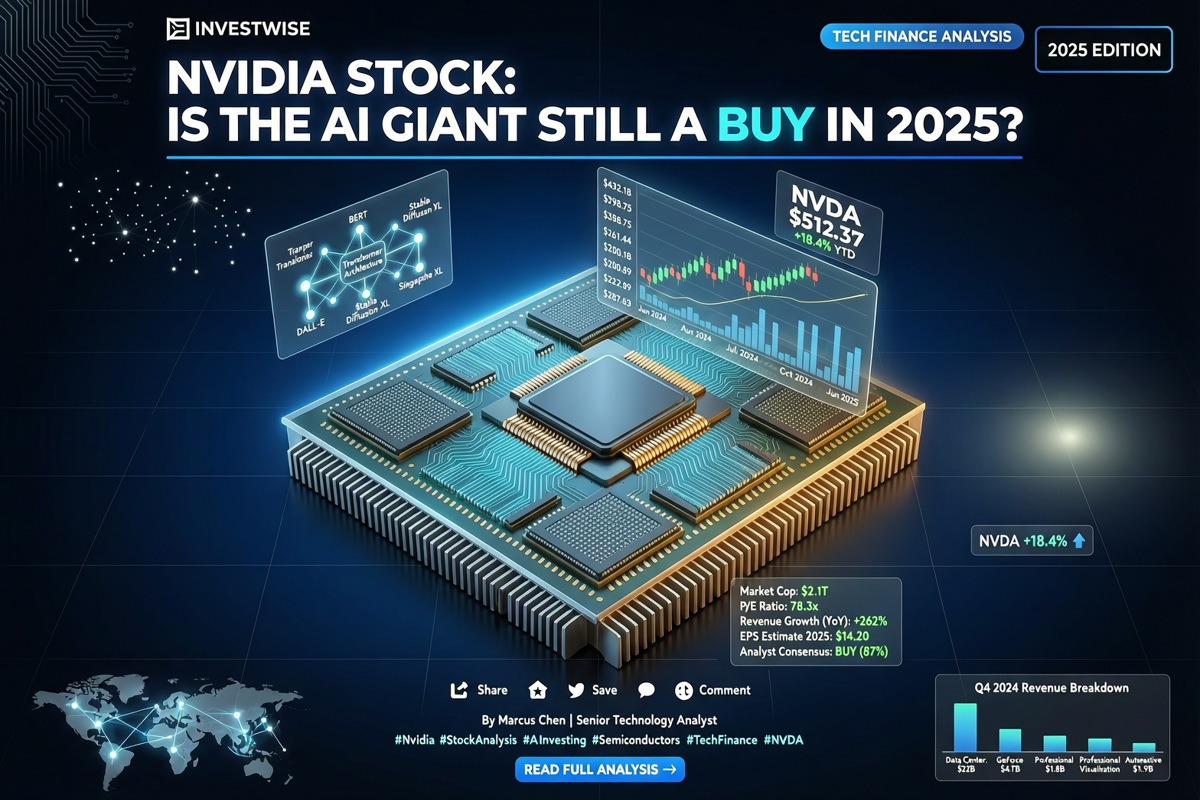
Nvidia Stock: Is the AI Giant Still a Buy in 2025?
Nvidia (NVDA) remains the leader in AI chips, but rising competition and valuation concerns test investor patience. Here's the 2025 outlook.
Nvidia's Dominance in the AI Chip Market
Nvidia (NASDAQ: NVDA) has been the face of the artificial intelligence revolution, with its graphics processing units (GPUs) powering everything from large language models to autonomous vehicles. In 2025, the company continues to command over 80% of the AI chip market, but the landscape is shifting. Competitors like AMD and Intel are ramping up their offerings, while hyperscalers like Google, Amazon, and Microsoft are developing custom silicon. Despite this, Nvidia's CUDA ecosystem and software moat remain formidable barriers to entry.
Financial Performance and Valuation
Nvidia's revenue has surged in recent years, driven by data center sales. In fiscal 2024, the company reported $60.9 billion in revenue, and analysts project over $100 billion for fiscal 2025. However, the stock's valuation has become a point of contention. Trading at over 30x forward earnings, NVDA is not cheap. But proponents argue that the growth trajectory justifies the premium, especially as AI adoption accelerates across industries.
Key Financial Metrics
- Revenue Growth: Data center revenue grew 217% year-over-year in the most recent quarter.
- Profit Margins: Gross margins exceed 70%, reflecting pricing power and scale.
- Cash Flow: Free cash flow is robust, funding R&D and share buybacks.
Competitive Threats and Opportunities
While Nvidia leads, it faces headwinds. AMD's MI300 series has gained traction with some cloud providers, and Intel's Gaudi 3 is targeting cost-sensitive customers. Moreover, export controls to China have limited Nvidia's addressable market. On the flip side, the company is expanding into new verticals like automotive, robotics, and healthcare. Its recent partnerships with major automakers for autonomous driving platforms signal long-term growth potential.
Regulatory and Geopolitical Risks
Nvidia's exposure to geopolitical tensions cannot be ignored. The U.S. government's chip restrictions on China have forced Nvidia to develop lower-performance chips for that market. Further escalation could hurt sales. Additionally, antitrust scrutiny in the U.S. and EU regarding AI market concentration may pose regulatory risks.
Analyst Outlook and Price Targets
Wall Street remains largely bullish on NVDA. The average analyst price target is around $800, with some high-profile bulls projecting $1,000. However, skeptics warn of a bubble, citing the rapid run-up and potential for a slowdown in AI spending. Investors should watch for key catalysts like the upcoming GTC conference and quarterly earnings.
Should You Buy Nvidia Stock in 2025?
Nvidia is a high-growth stock with a dominant market position, but it's not without risks. For long-term investors who believe in the secular AI trend, NVDA could be a core holding. However, those with a lower risk tolerance may want to wait for a pullback or diversify into other AI plays. As always, due diligence and portfolio alignment are key.