Erectile Dysfunction: Understanding Causes, Diagnosis, and Treatment Options
Erectile Dysfunction: Understanding Causes, Diagnosis, and Treatment Options
Introduction
Erectile dysfunction (ED) is a common condition that affects many men at different stages of life. It refers to the consistent difficulty in achieving or maintaining an erection sufficient for satisfactory sexual activity.
While occasional difficulties may not be a cause for concern, persistent symptoms can impact confidence, relationships, and overall well-being. This guide provides an educational overview of erectile dysfunction, including its causes, how it is evaluated, and commonly discussed treatment approaches.
What Is Erectile Dysfunction?
Erectile dysfunction involves challenges related to the physiological processes required for an erection. These processes include blood flow, nerve function, hormone levels, and psychological factors.
ED can vary in severity and may develop gradually or suddenly, depending on underlying causes.
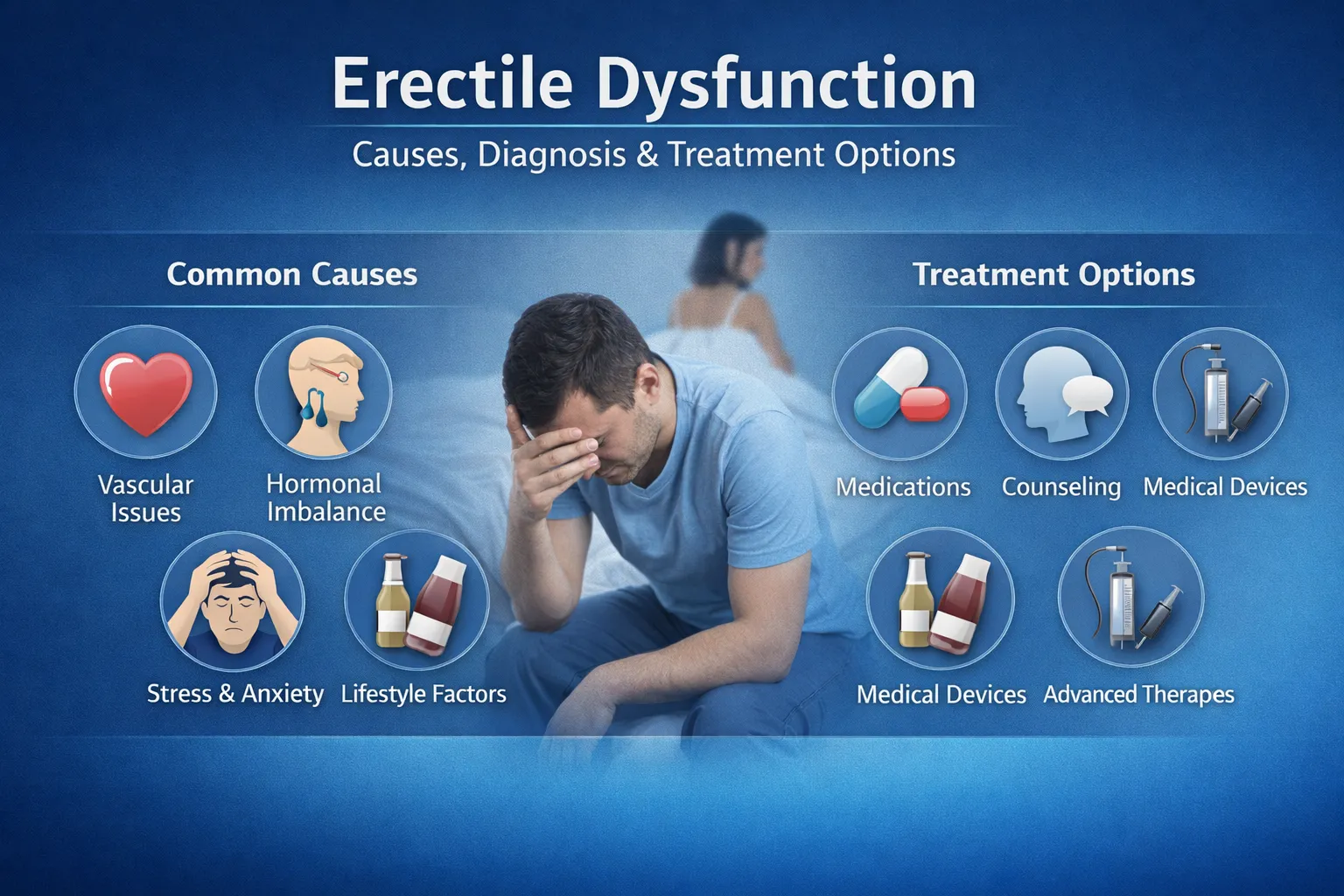
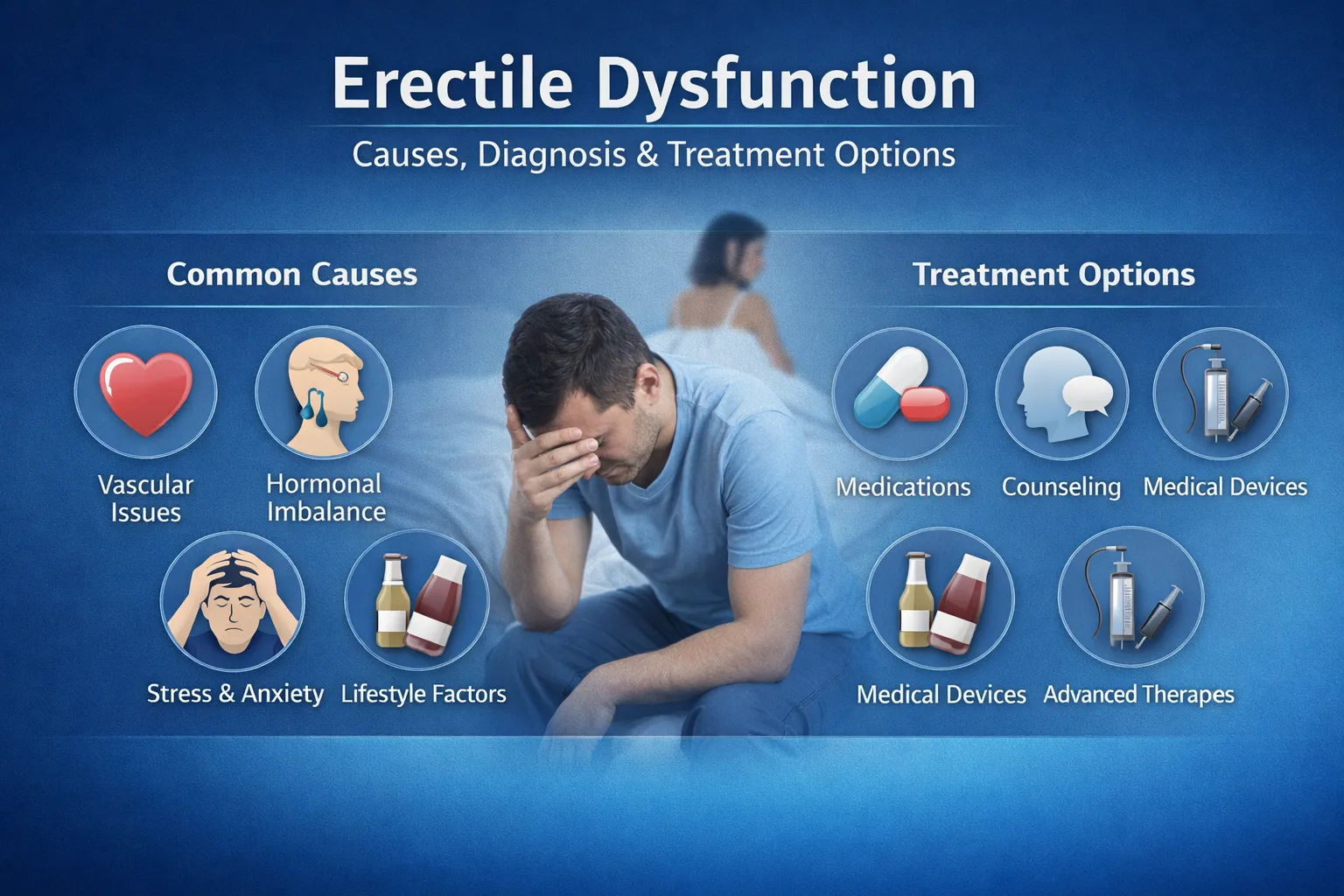
Common Causes of Erectile Dysfunction
Erectile dysfunction is often influenced by a combination of physical and psychological factors.
Physical Causes
- Reduced blood flow to the penis
- Cardiovascular conditions
- Diabetes and metabolic disorders
- Hormonal imbalances (e.g., low testosterone)
- Neurological conditions
- Side effects of certain medications
Psychological Causes
- Stress and anxiety
- Depression
- Relationship concerns
- Performance-related pressure
Lifestyle Factors
- Smoking
- Excessive alcohol consumption
- Lack of physical activity
- Poor diet
Understanding the root cause is important for determining appropriate management strategies.
How Erectile Dysfunction Is Diagnosed
Diagnosis typically involves a combination of medical history review, symptom assessment, and, when necessary, diagnostic testing.
Medical Evaluation May Include:
- Discussion of symptoms and duration
- Review of medical and medication history
- Physical examination
- Blood tests (e.g., hormone levels, blood sugar)
- Cardiovascular health assessment
In some cases, additional specialized tests may be recommended to evaluate blood flow or nerve function.
Overview of Treatment Options
Treatment for erectile dysfunction depends on the underlying cause, severity, and individual preferences. Options generally fall into several categories.
1. Lifestyle Modifications
Improving overall health can play a key role in managing ED:
- Regular physical activity
- Balanced nutrition
- Weight management
- Reducing alcohol intake
- Quitting smoking
These changes may also support cardiovascular health, which is closely linked to erectile function.
2. Oral Medications
Prescription medications are commonly discussed as a first-line treatment. These are designed to enhance blood flow and support the natural erectile response when combined with sexual stimulation.
Use of these medications should always follow professional medical guidance.
3. Psychological Support
When psychological factors are involved, counseling or therapy may be beneficial. Addressing stress, anxiety, or relationship dynamics can improve overall outcomes.
4. Medical Devices
Some non-surgical options include devices that assist in achieving an erection by improving blood flow mechanically.
5. Advanced and Clinical Treatments
In certain cases, additional approaches may be considered:
- Hormone therapy (if deficiency is identified)
- Injectable medications
- Surgical options such as implants
These treatments are typically explored when other methods are not effective or suitable.
Factors to Consider When Choosing a Treatment
Selecting an approach depends on multiple factors:
- Underlying cause of ED
- Overall health condition
- Personal preferences
- Potential side effects
- Cost and accessibility
Consulting a qualified healthcare professional is essential to determine the most appropriate plan.
Importance of Early Evaluation
Erectile dysfunction can sometimes be an early indicator of other health conditions, particularly cardiovascular issues. Seeking timely evaluation may help identify and address broader health concerns.
Setting Realistic Expectations
Treatment outcomes can vary. Some individuals may respond quickly to certain approaches, while others may require adjustments over time. Consistency and professional guidance are key to achieving the best possible results.
Conclusion
Erectile dysfunction is a manageable condition with a wide range of available approaches. Understanding its causes, evaluation methods, and treatment options can help individuals make informed decisions about their health.
Seeking accurate information and professional advice is an important step toward improving both physical and emotional well-being.